
Simultaneous vs. Consecutive Interpretation in Video Conferencing

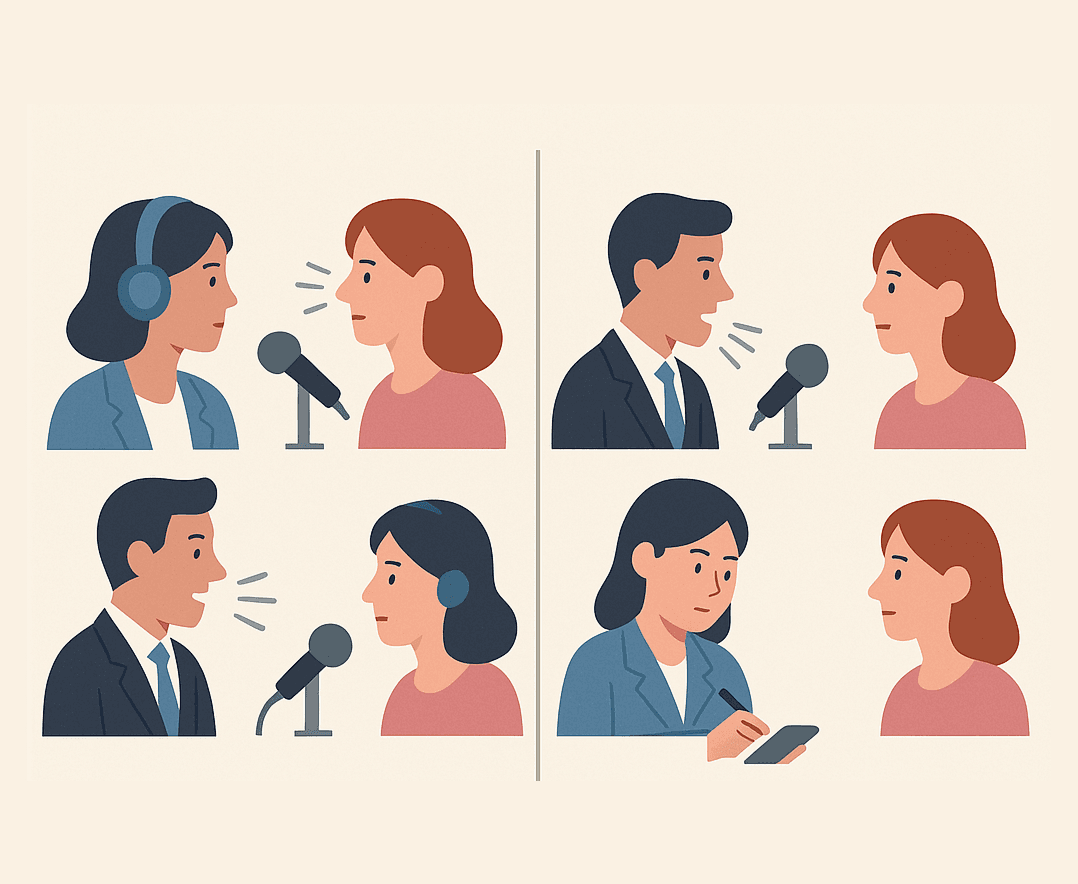
As global business increasingly shifts to video conferencing, overcoming language barriers has become critical. Different interpretation methods offer distinct advantages and challenges, especially regarding meeting flow, participant engagement, and non-verbal communication in virtual settings.
This article compares three interpretation methods used in video conferencing — consecutive interpretation, simultaneous interpretation, and lip sync interpretation — to help you choose the best option for your meetings.
1. Consecutive Interpretation
Consecutive interpretation is delivered after the speaker finishes a segment.
- Process:
In video conferences, the interpreter speaks once the speaker pauses. Participants alternate between listening to the speaker and the interpreter. - Effect:
This method ensures high translation accuracy but extends meeting duration and disrupts conversational flow, which can be a drawback in fast-paced video conferences.

2. Simultaneous Interpretation
Simultaneous interpretation is delivered almost in real-time during the speaker’s speech.
- Process:
Interpreters listen and translate concurrently, using separate audio channels that participants can select on video conferencing platforms. - Effect:
This method maintains a natural meeting flow with only 2–4 seconds of delay. It is ideal for large or dynamic meetings but requires professional interpreters and specialized equipment. Some audiovisual mismatch may occur, as participants hear a translated voice while seeing the original speaker’s facial expressions.

3. Lip Sync Interpretation
- Process:
AI translates short segments of speech and adjusts the speaker’s facial video to match the translated audio in real time during video conferences. Importantly, the speaker’s original face and voice characteristics are preserved, increasing trust. - Effect:
It reduces audiovisual disconnect, offering a more natural and engaging communication experience.
Although still evolving, this method bridges the natural delivery and accuracy of consecutive interpretation with the real-time immediacy of simultaneous interpretation, while allowing participants to see and hear the speaker’s true expressions and voice.

Comparison Table (Video Conferencing Context)
Feature | Consecutive Interpretation | Simultaneous Interpretation | Lip Sync Interpretation (AI) |
|---|---|---|---|
Interpretation Speed (5s sentence) | 1-3s wait, then 5-7s translation | 2-4s wait, then immediate listening |
|
Accuracy | High | Moderate | High |
Visual-Audio sync | Mismatched | Mismatched | Synchronized |
Participant Engagement/Naturalness | Low to Moderate | High | Very High |
Requirements | Professional interpreters | Professional interpreters | None |
Interpreter Cost | High ($80~$200/hour x2) | Very High ($100~$250/hour x2) | Very Low ($9.6/hour) |
Platform | Zoom, Google Meet, Microsoft Teams, Cisco Webex | Zoom, Microsoft Teams, Cisco Webex, KUDO, Interprefy, Interactio | Deeptrue |
Conclusion: Choosing the Right Method for Video Conferences
Each method has unique strengths and limitations, and the best choice depends on the nature of your video conference:
- Consecutive Interpretation: Best for meetings where accuracy is critical and longer durations are acceptable.
- Simultaneous Interpretation: Best for fast-paced, real-time meetings where seamless communication is essential, and recommended for those who have sufficient budget to hire professional interpreters.
- Lip Sync Interpretation: Best as the most cost-effective solution, available on-demand for daily use, and enabling users to communicate directly without intermediary interpreters.
When selecting an interpretation method, consider factors such as the meeting type, participant numbers, budget, and the importance of maintaining natural visual and verbal cues during your video conference.
Related posts
5 Solutions for Real-Time Translation in Video Meetings
A comparison of Zoom, Google Meet, Microsoft Teams, Webex, and Deeptrue for real-time translation in video meetings, helping you choose the right solution for your multilingual communication needs.
Top 4 Real-Time Translation & Interpretation Tools for Global Meetings (2025)
Looking for the best real-time translation tools for your international meetings in 2025? Compare Deeptrue, Interprefy, Wordly, and KUDO
Stay in the loop
Get the latest Deeptrue updates and industry insights delivered to your inbox.